


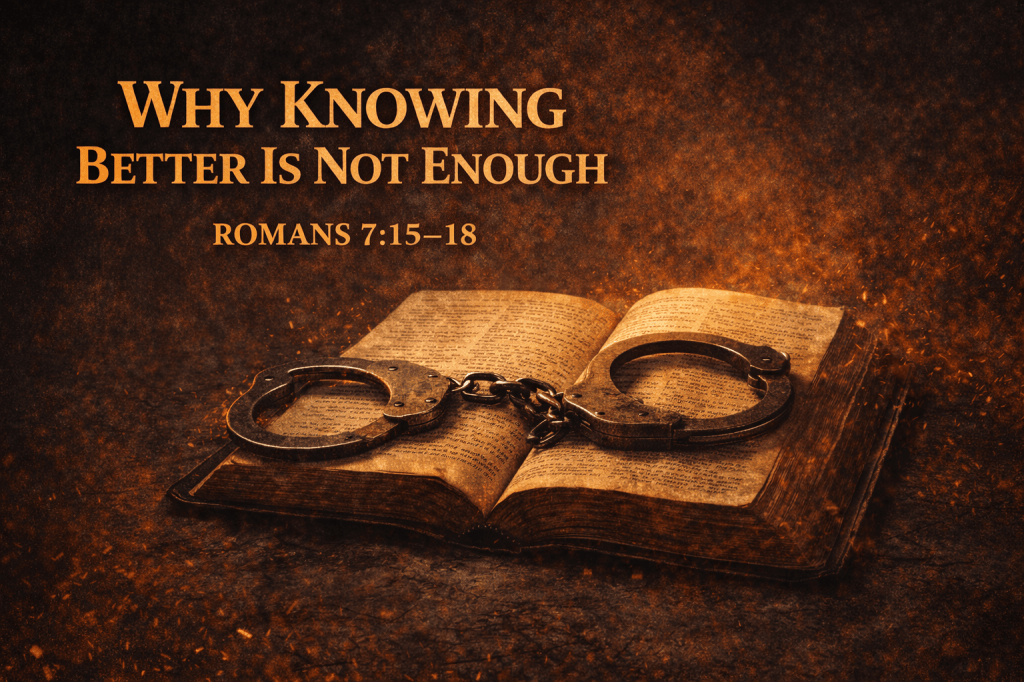
Romans 7:15–18
One of the most frustrating moments in the Christian life is realizing that knowing the truth does not automatically lead to living the truth. Most men are not stuck because they lack information. They are stuck because information alone does not have the power to change behavior. Romans 7 confronts this reality directly, and Paul does not soften the blow.
When Paul says, “I do not understand what I do. For what I want to do I do not do, but what I hate I do,” he is describing something intensely practical. This is not abstract theology. It is everyday life. It is the man who wants to be patient with his family and snaps anyway. The man who wants to be disciplined but defaults to distraction. The man who wants to grow spiritually but keeps choosing comfort when obedience requires effort.
We know what is right. We agree with it. We even want it. And yet, when the moment arrives, something else takes control.
Paul is clear about the problem. It is not desire. It is power.
This distinction matters because many men assume that spiritual growth is primarily about wanting the right things badly enough. When that does not work, they conclude they are lazy, weak, or broken. So they respond the only way they know how. They try harder. They add rules. They set stricter goals. They pile on accountability. For a short time, those tactics may produce visible improvement. Eventually, they fail, and the cycle repeats.
Self effort always exhausts.

Paul explains why in Romans 7:18. He says he has the desire to do what is good, but he cannot carry it out on his own. That statement dismantles the idea that sincerity equals transformation. Paul is sincere. He is committed. He understands what is right. Yet understanding alone does not give him authority over his impulses.
This is where the struggle becomes practical. When a man relies on motivation, he is relying on emotional energy. Motivation rises when life is calm and inspiration is high. It fades quickly under stress, fatigue, conflict, temptation, or disappointment. Real life does not cooperate with motivation. That is why obedience built on motivation alone becomes inconsistent.
This is also why Bible knowledge alone does not stop sin. Scripture informs the mind, but it does not automatically govern behavior. A man can know the right verse and still make the wrong choice. Knowledge exposes what is wrong, but it does not supply the strength to resist it. That strength must come from somewhere else.
The flesh does not need encouragement. It needs restraint. And restraint does not come from willpower. It comes from authority.
So what does this look like in practice?
It looks like recognizing that moments of temptation are not primarily moments of weakness, but moments of misplaced reliance. When you feel pulled toward distraction, impatience, lust, anger, or apathy, the question is not “Why am I so bad at this?” The better question is “What am I drawing strength from right now?”
If your day has been shaped by constant noise, pressure, and reaction, the flesh will be loud. If prayer has been absent, discernment will be weak. If Scripture has been neglected, perspective will shrink. None of this is punishment. It is cause and effect.
This is why spiritual disciplines matter so much in everyday life. Not as religious checklists, but as sources of authority. Prayer positions you under the leadership of the Spirit before decisions are required. Scripture renews your thinking so that obedience becomes clearer before temptation arrives. Consistency matters because influence compounds. What you give attention to gains power over you.
When men say they feel stuck, the issue is often not effort. It is fuel.
Good intentions are not fuel. The Spirit is.
Once a man understands this, his approach to growth changes. Instead of promising himself to do better, he focuses on creating space for the Spirit to lead. Instead of relying on guilt to force change, he builds rhythms that strengthen resistance. Instead of condemning himself for struggling, he treats struggle as a signal to return to the source of strength.
This may look simple, but it is deeply practical. Start the day in Scripture before the noise begins. Pray honestly, not eloquently. Acknowledge dependence instead of pretending control. When you feel the tug toward old habits, pause long enough to recognize what is happening. You are not failing. You are being invited to rely on something stronger than yourself.
Romans 7 does not excuse sin, but it does expose the lie that trying harder is the solution. Paul does not say he needs more resolve. He says he needs rescue. That rescue begins with dependence, not effort.
If you are tired, frustrated, or discouraged, do not assume you are broken. Ask instead what has been shaping your attention and fueling your decisions. Transformation does not begin with more information. It begins when you surrender control and allow the Spirit to supply what effort never could.
That shift is where real freedom starts.
 Unleashed By Faith
Leave a comment